Deep within the mist-shrouded peaks of China’s Wudang Mountains, a tradition of martial and spiritual cultivation stretches back centuries. Among the many practices honed in this cradle of Daoism, the frog jump exercise stands out for its simplicity and profound power. This article explores the deep roots of frog jumping in Wudang Kung Fu, particularly within the Sanfeng Pai tradition led by the renowned Master Zhong Yunlong, and unravels the synergy between this demanding exercise and the essential art of regeneration.
Hint: More traditional exercises can be found in our Academy section for paid members only! Check it out here! Your membership supports this website!

The Historical and Philosophical Roots of Wudang Kung Fu
Wudang Mountain is synonymous with internal martial arts (Neijia), most famously Tai Chi Chuan (Taijiquan), which emphasize the cultivation and circulation of internal energy, or Qi (Chi). Unlike the external, hard power of Shaolin Kung Fu, Wudang arts prioritize softness, flexibility, and the use of an opponent’s force against them. The philosophical underpinnings are deeply rooted in Daoist principles, particularly the balance of Yin and Yang and the harmonious integration of mind, body, and spirit.
The Sanfeng Pai tradition traces its lineage to the legendary Daoist immortal Zhang Sanfeng. As a legitimate inheritor of this orthodox lineage, Master Zhong Yunlong has been a pivotal figure in preserving and modernizing Wudang martial arts. When Wudang Taoism first opened to the outside world, Master Zhong was tasked by the Wudang Taoist Association with the mission of “unearthing” and formally systematizing Wudang martial arts. He became the foremost member of the first Wudang Taoist Martial Arts Team and was appointed as the “Wudang Taoist Association Martial Arts Chief Coach,” formally bringing Wudang Kung Fu into the public eye.
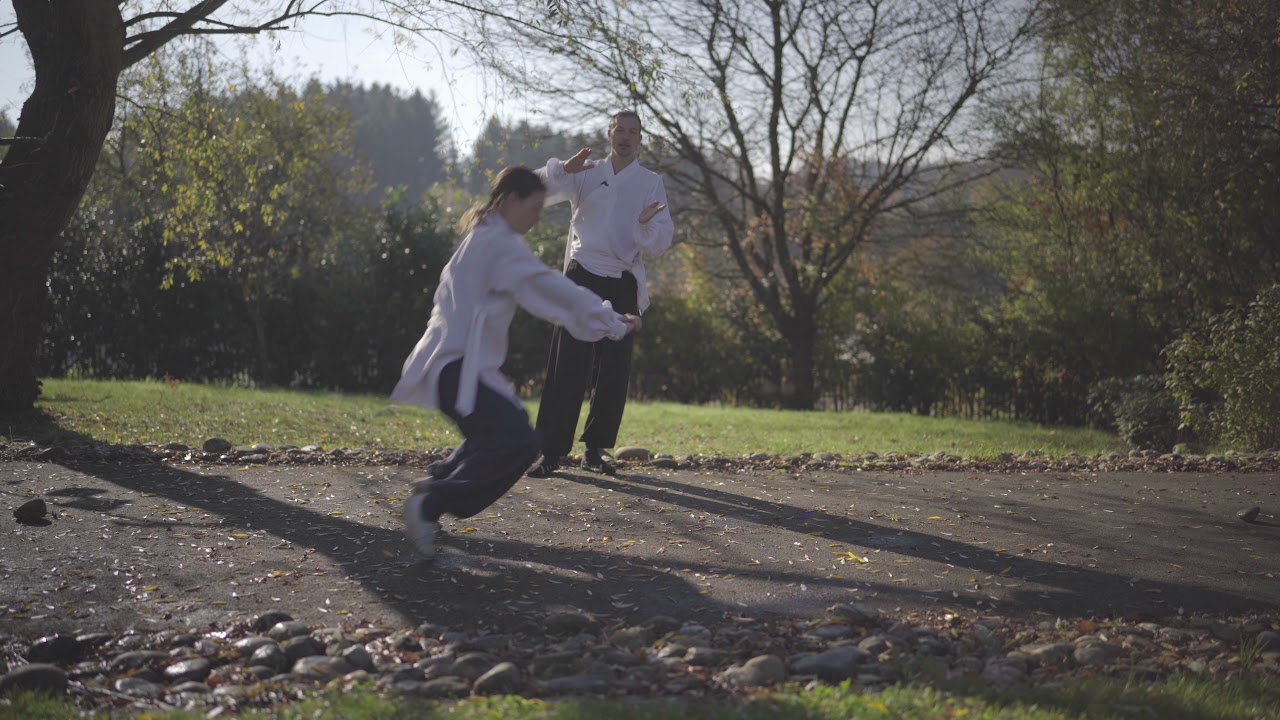
The training under Master Zhong at the Sanfeng Academy is comprehensive and austere, designed to build not just martial skill but also immense physical and mental fortitude. Disciples undergo foundational training that includes “hopping, frog-jumping, waddling, creeping, squatting and doing sit-ups and push-ups.” It is within this context of building foundational strength and endurance that the frog jump, or qingwa tiao , has been adopted and maintained as a cornerstone exercise.
Frog Jump Training: Methodology and Biomechanics
The frog jump is more than a simple squat jump; it is a precise exercise that engages the entire body in a manner consistent with Daoist body mechanics.
The Correct Form and Progressive Learning
Mastering the frog jump is a journey of gradual adaptation. The body must acclimatize to the unique physical demands, particularly the feeling of oxygen deprivation in the deep squat position.
- Start with the Stance : Begin in a deep squat with your feet shoulder-width apart. Your back should be straight, not rounded, to allow for proper Qi flow and to align with the principle of keeping the spine straight for optimal energy circulation.
- Use Arm Support : Initially, you can place your hands or fists on your knees for support. This helps with balance and allows you to focus on the leg movement without falling backward, making the initial forays into the exercise more manageable.
- Master the Small Hop : Before attempting large jumps, practice small, controlled hops. Push through the balls of your feet and focus on a gentle, rolling motion from the heel to the toe upon landing. This rolling action is crucial—it distributes the impact force across the foot and ankle, significantly reducing the jarring pressure on the knees, hips, and spine that a flat-footed landing would create. This concept of smooth, rooted motion is central to internal arts, where power is generated from the legs and expressed through the extremities.
- Progress to Full Jumps : As your strength and confidence grow, you can remove the hand support, swing your arms for momentum, and increase the distance of your jumps. The focus should always be on control and smooth, fluid motion rather than on speed or height alone, embodying the Daoist ideal of effortless action, or wu wei .
The Physiological “Why”: Power and Oxygen Debt
The challenge of the frog jump is physiological. The deep squat position compresses the thoracic cavity, making it difficult to take full breaths and leading to a state of hypoxia (oxygen deficiency) in the working muscles. While this feels punishing, it is a deliberate part of the training. This stress forces the body to adapt by improving metabolic efficiency and increasing the production of mitochondria, the powerhouses of the cells.
The movement itself is a powerful demonstration of lower-body strength. The primary muscles engaged are the glutes, quadriceps, hamstrings, and calves. The jump is a plyometric exercise, meaning it involves a rapid stretching and shortening of the muscle fibers, which is essential for developing explosive power.
Scientific studies on actual frog muscles provide a fascinating parallel. Research has shown that frog muscles powering jumps are specialized for high work output. They operate over a wide range of lengths, starting elongated and shortening significantly to generate the necessary propulsive force. Furthermore, these muscles are coupled with compliant tendons, which act like springs. This allows for the storage and release of elastic energy, amplifying the power output beyond what the muscle can produce alone. The Wudang practitioner, through repetitive frog jumps, is essentially training their own musculoskeletal system to harness similar principles of power generation and efficiency.
The Dao of Regeneration: Recovery as Cultivation
In Daoist philosophy, action must be balanced by stillness. The intense Yang activity of frog jumping must be counteracted by the Yin practices of recovery and regeneration. Neglecting this balance leads to stagnation, injury, and hindered progress.
Post-Training Recovery Practices
The following practices are integral to the training regimen of a Wudang disciple, ensuring that the body repairs and grows stronger.
- Cool-Down and Stretching : After a session of frog jumps, gentle stretching of the legs, hips, and lower back is essential. This helps to alleviate muscle tightness, promote blood circulation, and facilitate the removal of metabolic waste products like lactic acid.
- Qi Gong and Breath Work : Practices such as Zhan Zhuang (standing meditation) are used to calm the mind and regulate the breath. By placing the mind on the abdominal dan tian and breathing deeply and naturally, the practitioner directs Qi to soothe the nervous system and repair the body. This mental focus is as important as the physical rest.
- Adequate Rest and Nutrition : Traditional Chinese medicine principles emphasize the importance of rest and proper nutrition for rebuilding the body. Sleep is when the most significant recovery occurs, and foods that nourish the blood and Qi are considered vital.
- Listening to the Body : A fundamental Daoist principle is to follow the natural way. This means understanding the difference between the productive discomfort of building strength and the sharp pain of injury. Pushing too hard through pain violates the principle of balance and can lead to long-term setbacks.
Video Tutorial
 let us know your experience!