The Ageless Path of Internal Martial Arts
The misty peaks of Wudang Mountains have harbored a profound secret for centuries: the cultivation of internal strength knows no age limits. While many assume martial arts training is the exclusive domain of the young, scientific research and traditional wisdom converge on a remarkable truth—Wudang’s internal martial arts are not only accessible to practitioners over 50, but may be particularly beneficial during this life stage[1][2].
The ancient Daoist principle underlying Wudang practice emphasizes that “these practices are soft and slow-moving, and are helpful in coordinating breathing and intention/thinking, regulating blood and circulation, and relaxing the spirit and mind”[3]. This approach makes Wudang training uniquely suited for older adults seeking both physical vitality and spiritual cultivation.
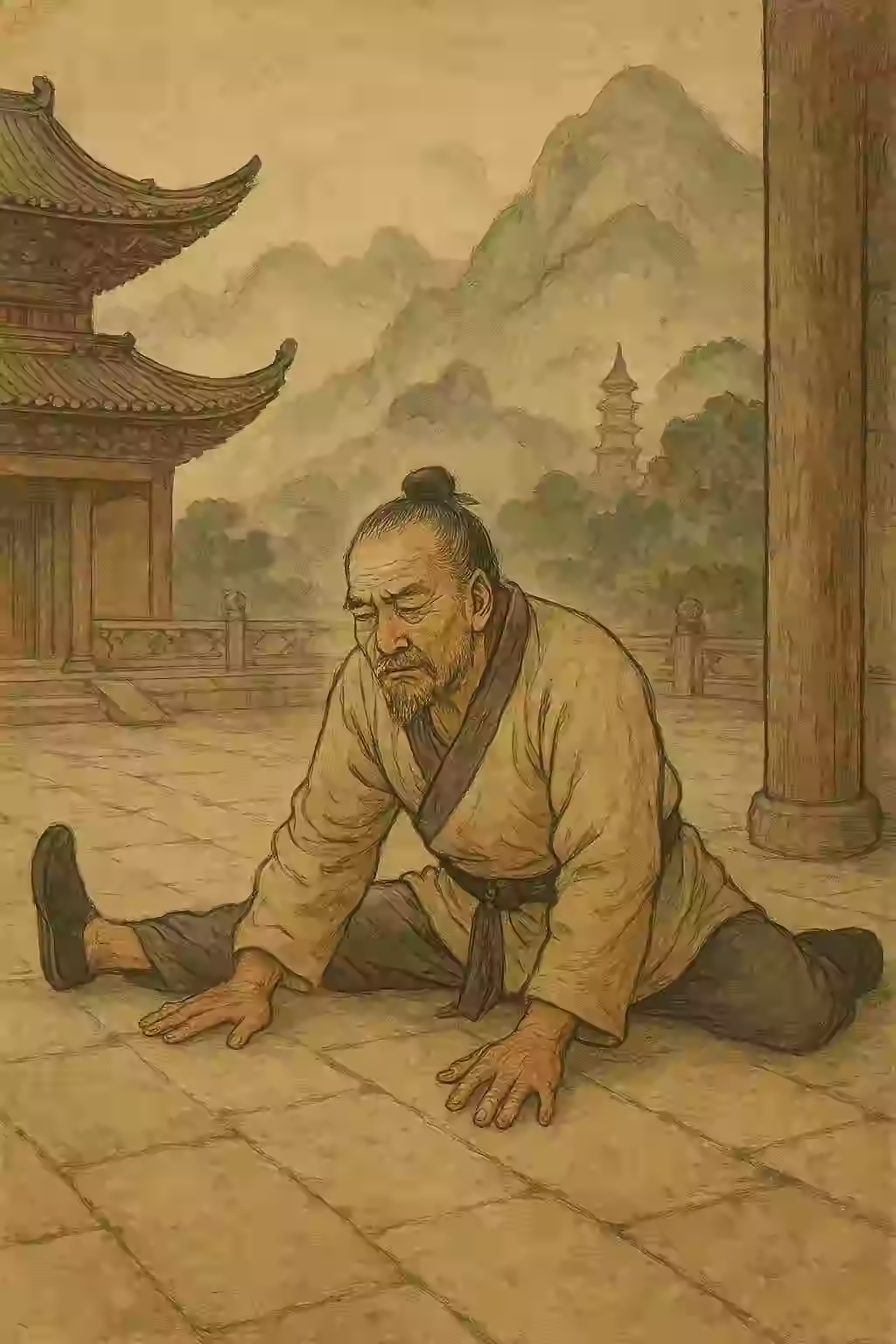
Understanding the Flexibility Challenge After 50
The Science of Age-Related Changes
Research reveals that flexibility naturally decreases by 20-50% between ages 30 and 70[4]. Studies specifically examining older adults show that shoulder and hip joint flexibility decreases by approximately 6 degrees per decade after age 55[5]. However, this decline is far from inevitable or irreversible.
Multiple scientific investigations demonstrate that older adults maintain the remarkable ability to improve flexibility through targeted training programs[6]. A systematic review of flexibility training in adults over 65 found significant improvements achievable within 8-32 weeks of consistent practice, with some studies reporting flexibility increases of 11.1-316.7%[7].
The Wudang Advantage for Flexibility
Unlike aggressive stretching methods that can strain aging tissues, Wudang’s approach emphasizes “relaxed, natural movement, a soft external and strong internal, moving like clouds and flowing water”[8]. This methodology aligns perfectly with research showing that gradual, mindful movement practices are most effective for improving flexibility in older adults while minimizing injury risk[9].
The internal focus of Wudang training addresses multiple age-related concerns simultaneously. As traditional teachings explain, Wudang practice “can help in lowering the degree of blood viscosity, reducing cholesterol, and blood stasis; improving blood circulation”[10]—benefits that support the very physiological processes needed for maintaining and improving flexibility.
Overcoming Physical Challenges: The Internal Cultivation Approach
Redefining Strength and Power
One of the greatest hurdles for adults beginning martial arts after 50 is the misconception that physical power must come from muscular force. Wudang’s internal cultivation offers a revolutionary alternative. The core philosophy emphasizes “to be hard and strong inside, round and smooth outside”[11], teaching practitioners to generate power through proper body mechanics, breath work, and internal energy circulation rather than raw muscle strength.
This approach is particularly relevant as research shows muscle mass decreases by 1% per year after age 50[12]. Rather than fighting this natural process, Wudang training works with the body’s changing capabilities, developing what traditional texts call “internal and external coordination” where “once the intention and breathing are ignited, all the limbs move”[13].
Addressing Joint Health and Mobility
Scientific evidence strongly supports the benefits of Tai Chi and qigong practices for older adults. A comprehensive review of Tai Chi research found improvements in balance (20.5%), flexibility (11.1-316.7%), and overall functional fitness parameters in adults over 60[14]. These improvements occur through Wudang’s emphasis on gentle, flowing movements that promote joint mobility without excessive stress.
The practice of standing meditation, Taiji forms, and Baduanjin (Eight Pieces of Brocade qigong) specifically targets the flexibility challenges common after 50[15]. These exercises work systematically through all major joint systems while incorporating breathing patterns that enhance circulation and reduce inflammation.
Age-Appropriate Training Modifications
Listening to Your Body’s Wisdom
Successful Wudang training after 50 requires what practitioners call “listening to your body”[16]. This principle, deeply rooted in Daoist philosophy, encourages students to honor their current physical limitations while gradually expanding their capabilities. Research confirms that older adults who practice self-monitoring during exercise show better long-term outcomes and reduced injury rates[17].
Traditional Wudang instruction emphasizes that “if there is one type of practice Daoist qigong method not mastered, temporarily don’t practice other training methods”[18]. This graduated approach allows older practitioners to build solid foundations before progressing to more complex movements.
Warming Up and Preparation
Unlike younger practitioners who may jump directly into training, adults over 50 benefit from extended warm-up periods. Research indicates that proper preparation becomes increasingly important with age to prevent injury and optimize performance[19]. Wudang’s traditional approach naturally incorporates this through standing meditation and gentle qigong exercises that serve as both warm-up and fundamental training.
The philosophy of “step-by-step achieve an abdomen relaxed inside and breath ascending correctly”[20] provides a structured progression that respects the body’s need for gradual adaptation while building internal strength and flexibility systematically.
The Universal Nature of Internal Cultivation
Breaking Age Barriers in Training
One of Wudang’s most remarkable characteristics is its genuine accessibility across age groups. Unlike external martial arts that may favor youth and physical prowess, internal cultivation emphasizes qualities that often improve with age: patience, mindfulness, and the ability to focus inward. Traditional teachings state that Wudang practices are “quite suitable and beneficial for everyone—especially young children, the elderly and infirm”[21].
This universality stems from Wudang’s fundamental philosophy of working with natural principles rather than against them. The eight criteria of Wudang Taijiquan—“lightness, easiness, roundness, evenness, flexibility, changeableness, steadiness and precision”[22]—describe qualities achievable through patient practice regardless of starting age or initial physical condition.
Building Community Across Generations
Modern research confirms that group-based martial arts training promotes increased socialization and greater physical activity compliance in older adults[23]. Wudang schools traditionally welcome practitioners of all ages, creating learning environments where wisdom and experience are valued alongside physical ability.
Many practitioners report that beginning Wudang training after 50 connects them with communities spanning multiple generations, where they can both learn from more experienced practitioners and mentor newcomers. This intergenerational aspect enriches the training experience beyond mere physical exercise.
Scientific Evidence for Late-Life Martial Arts
Cognitive and Mental Health Benefits
Research demonstrates that Tai Chi and qigong practice significantly improve cognitive function in older adults, with benefits including enhanced memory, attention, and executive function[24]. A systematic review of meditative movement practices found consistent improvements in depression, anxiety, and overall quality of life among participants over 55[25].
These mental health benefits are particularly relevant for adults beginning training after 50, as Wudang practice offers both physical exercise and mental cultivation. The emphasis on mindfulness, breath awareness, and present-moment attention provides tools for managing stress and maintaining cognitive vitality.
Physical Function and Independence
Multiple studies confirm that Tai Chi reduces fall risk by 19-43% in community-dwelling older adults[26]. This fall prevention occurs through improvements in balance, strength, and proprioception that develop naturally through consistent Wudang practice. Research also shows significant improvements in functional mobility, with participants demonstrating better performance on tests of daily living activities[27].
The emphasis on “cultivation of health” in Wudang training provides a sustainable approach to maintaining independence and vitality throughout the aging process[28]. Unlike exercise programs that may become more difficult over time, internal cultivation practices can deepen and evolve with the practitioner’s changing capabilities.
Practical Guidelines for Beginning Practice
Finding Appropriate Instruction
Adults over 50 should seek instructors experienced in teaching older students and familiar with necessary modifications. Quality Wudang instruction emphasizes safety, gradual progression, and individual adaptation rather than standardized performance expectations. Many schools offer classes specifically designed for older adults or mixed-age classes that accommodate different ability levels[29].
The traditional approach of learning from qualified masters who understand both the physical and philosophical aspects of Wudang training ensures that students receive appropriate guidance for their individual circumstances and goals.
Setting Realistic Expectations
Beginning Wudang training after 50 requires adjusting expectations while maintaining ambitious goals for personal growth. Research shows that older adults can achieve significant improvements in flexibility, balance, and strength through consistent practice, but these changes occur gradually over months and years rather than weeks[30].
The traditional Wudang motto “be relaxed, complete, prompt, and sudden” applies to the learning process itself—relaxation and completeness in approach, promptness in regular practice, and sudden insights that emerge from patient cultivation.
The Transformative Potential of Later-Life Practice
Starting Wudang training after 50 represents not a compromise with aging, but an embrace of cultivation practices specifically suited to this life stage. The internal focus, emphasis on gradual development, and integration of physical and mental training create optimal conditions for healthy aging and continued growth.
As traditional teachings remind us, “you are never too old and it is never too late to learn”[31]. The path of internal cultivation offers not just maintenance of current abilities, but the genuine possibility of achieving levels of flexibility, balance, and overall vitality that surpass what many experienced in their younger years.
Wudang training after 50 exemplifies the profound truth that martial arts are not merely about physical prowess, but about the cultivation of human potential across the entire lifespan. Through patient practice of these time-tested methods, practitioners discover that the journey of internal development knows no age limits—only the boundaries we place on our own willingness to grow and transform.
Yang, F. C., Desai, A. B., Esfahani, P., Sokolovskaya, T. V., & Bartlett, D. J. (2021). Effectiveness of Tai Chi for health promotion of older adults: A scoping review of meta-analyses. American Journal of Lifestyle Medicine. ↩︎
Total Impact. (2024). Martial arts for adults over 50: Tips for training safely! Retrieved from https://totalimpactma.com/martial-arts-adults-50-tips-training-safely/ ↩︎
Wudang Store. (n.d.). The spirit of Wudang Kung Fu. Retrieved from The Spirit of Wudang Kung Fu ↩︎
Global Martial Arts University. (2021). Starting martial arts over 40: What you need to know. Retrieved from Starting Martial Arts Over 40: What You Need to Know – Global Martial Arts University ↩︎
Texas Health. (n.d.). When it comes to healthy aging, strength and flexibility go hand-in-hand. Retrieved from When It Comes to Healthy Aging, Strength and Flexibility Go Hand-in-Hand ↩︎
Stathokostas, L., Little, R. M. D., Vandervoort, A. A., & Paterson, D. H. (2012). Flexibility training and functional ability in older adults: A systematic review. Journal of Aging Research. ↩︎
National Center for Biotechnology Information. (2012). Flexibility training and functional ability in older adults: A systematic review. PMC3503322. ↩︎
Wudang Mountain Kung Fu Academy. (n.d.). Wudang Kung Fu. Retrieved from Wudang Kung Fu – Wudang Mountain Kung Fu Academy ↩︎
Acute and chronic effects of supervised flexibility training in older adults: A comparison of two different conditioning programs. (2022). International Journal of Environmental Research and Public Health, 19(24), 16974. ↩︎
Wudang Store. (n.d.). Health cultivation. Retrieved from Wudang Blog ↩︎
Wudang Research Association. (2023). Wudang martial arts. Retrieved from Wudang Martial Arts - Wudang Research Association ↩︎
Texas Health. (n.d.). When it comes to healthy aging, strength and flexibility go hand-in-hand. ↩︎
Wudang Research Association. (2023). Wudang martial arts. ↩︎
National Center for Biotechnology Information. Functional benefits of hard martial arts for older adults: A scoping review. PMC9797003. ↩︎
Wudang Store. (n.d.). Health cultivation. ↩︎
Total Impact. (2024). Martial arts for adults over 50: Tips for training safely! ↩︎
More Life Health. (2024). Flexibility exercises for seniors: A comprehensive guide. Retrieved from Flexibility Exercises For Seniors: A Comprehensive Guide — More Life Health - Seniors Health & Fitness ↩︎
Wudang Research Association. (2023). Principles of practice. Retrieved from Principles of Practice - Wudang Research Association ↩︎
Black Belt Wiki. (2018). Martial arts for beginners over 60. Retrieved from Martial Arts for Beginners over 60 - Black Belt Wiki ↩︎
Wudang Research Association. (2023). Principles of practice. ↩︎
Wudang Store. (n.d.). The spirit of Wudang Kung Fu. ↩︎
Wudang Research Association. (2023). Wudang martial arts. ↩︎
National Center for Biotechnology Information. Functional benefits of hard martial arts for older adults: A scoping review. ↩︎
National Center for Biotechnology Information. (2023). Effects of 12-week Tai Chi program on physical function, depression, and quality of life among cognitively impaired older adults: A feasibility study. BMC Geriatrics. ↩︎
National Center for Biotechnology Information. (2010). A review of clinical trials of Tai Chi and qigong in older adults. PMC2810462. ↩︎
Healthline. (2025). Tai Chi for seniors — 3 moves to improve balance and stability. Retrieved from Tai Chi for Seniors: 3 Moves to Improve Balance and Stability ↩︎
National Center for Biotechnology Information. Tai Chi for fall prevention and balance improvement in older adults: A systematic review and meta-analysis of randomized controlled trials. PMC10509476. ↩︎
Wudang Mountain Kung Fu Academy. (n.d.). Wudang Kung Fu. ↩︎
Wudang Academy. (n.d.). Internal Wudang arts. Retrieved from https://wudang.academy/ ↩︎
BMC Geriatrics. (2019). Effects of individualized Tai-Chi on balance and lower-limb strength in older adults. Retrieved from https://bmcgeriatr.biomedcentral.com/articles/10.1186/s12877-019-1250-8 ↩︎
Wudang Mountain Kung Fu Academy. (n.d.). Training plan. Retrieved from Training Plan – Wudang Mountain Kung Fu Academy ↩︎